Even a complete quote from a truck parts supplier can leave questions about product details, ordering and future supply. A price list shows the offer. It may omit the approved specification and the records to be supplied with the shipment. Buyers also need a clear process for approving changes.
For distributors buying heavy-duty replacement parts, the evaluation starts with a specific order. Ask the supplier to identify each part and state what the quote includes. Check the answers before purchase, then compare them with the first delivery. One delivery can inform the next buying decision, but it cannot prove long-term consistency.
Can the Supplier Resolve a Specific Parts Request?
A catalogue can point to possible sources. It may not resolve an unclear reference or competing versions. Send each supplier the same OE or other reference numbers, vehicle details and quantities. Add drawings or photographs when available. Mark missing details rather than asking the supplier to guess.
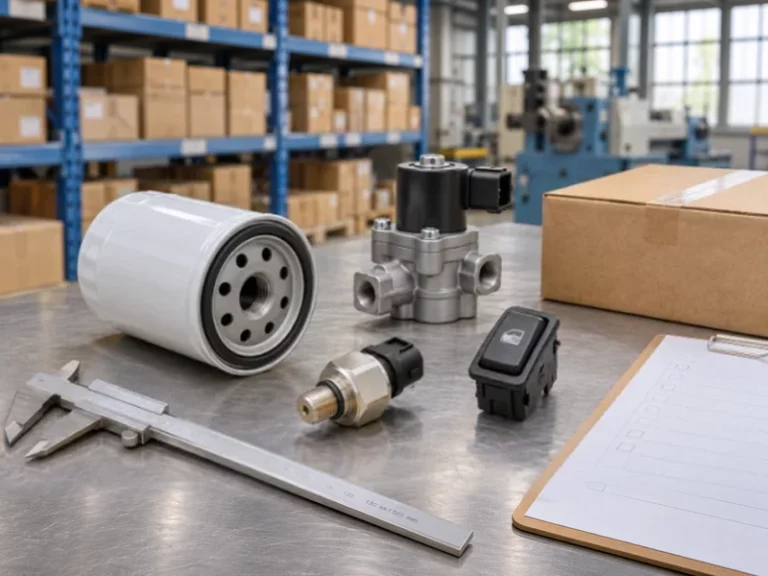
Suppose a distributor needs an ABS sensor and an oil filter. A range that includes truck sensors and filters is relevant, but category coverage cannot identify the required versions. The reply should distinguish items ready for review from those still needing vehicle or product details.
An incomplete request shows how the supplier handles uncertainty. Does it ask for a label photograph or mounting detail? Does it identify the proposed item and explain any alternative before quoting it? These answers matter when an importer orders on behalf of its own customers.
A truck parts lookup can locate a candidate by OE or supplier number. Keep OE references, cross-references and internal product codes distinct. None alone confirms interchangeability. Compare the proposed version with its vehicle application and the specifications relevant to that item.
What Should a Truck Parts Supplier Confirm in Writing?
Once an item is identified, its quotation should describe what will actually be supplied. Each approved line needs to carry its product version and agreed conditions into the purchase order.
The Proposed Part and Approved Changes
Record the proposed part number, reference, vehicle application and approved specification or sample. Use photographs to show visible features. A drawing can identify a connector or mounting dimension that matters for fitment. Keep the approval with the order; a catalogue image is not enough.
If the supplier proposes an alternative, ask what has changed and approve it before ordering. Keep the original request and proposed substitute on the quote. Approval for one vehicle application does not cover every related application. These records tell the receiving team which version to expect.
On a repeat order, ask whether the product version, source, label or packaging has changed. Obtain details before release. Earlier approval is useful only when the accepted version is identifiable.
Availability and Order Responsibilities
A truck spare parts supplier should separate confirmed items from those awaiting a manufacturer’s reply. Ask for quantities and expected ready dates by line, especially when parts come from different sources. Agree how the supplier will report changes. The buyer can then decide whether to wait, accept a substitute or approve a partial shipment.
Record packaging, carton identification, any private-label work and the trade term. Check whether a separate packaging minimum applies. Written terms help the buyer compare the quote with the order and address a delay.
What Evidence Supports Quality and Inspection Claims?
Quality statements need a defined scope. A manufacturer’s certificate, an approved sample and an incoming inspection record answer different questions. Ask which evidence applies to the proposed product and order.
Certificates, Samples and Product Records
Verify a certificate’s holder, site, validity and scope. A manufacturing partner’s certificate is not a company-wide certification for its customers or proof of a batch test. If a test report is needed, identify the test, product version and responsible party before ordering.
Keep the approved sample’s part number, photographs and any relevant drawing. Use that record to check later deliveries. An aftermarket truck parts supplier may work with several manufacturers. Product-specific records give buyers more to assess than broad quality claims.
How Should a Truck Parts Supplier Define Inspection Scope?
Define inspection in the order. Receiving checks may cover appearance, key dimensions, markings, quantities and labels. Functional or material tests need their own methods and responsible parties. Agree what evidence will be supplied, such as photographs, measurements or a report for the relevant product or batch.
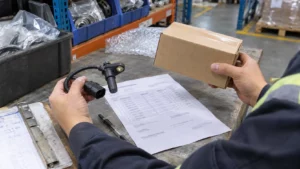
Ask where the checks take place. Manufacturing checks may address production or completed assemblies; receiving checks compare delivered goods with the order. The method and sampling level of warehouse verification can vary by product, batch and customer requirement. It does not establish a laboratory test unless one is separately documented.
Put inspection requirements that affect the purchase decision in the order. Agree how an incomplete check or proposed correction will be reported before dispatch. Do not assume every unit receives the same examination.
What Can a First Delivery Reveal?
The first shipment lets a buyer compare commitments with received goods. Record what is observable at receipt. One satisfactory delivery gives useful evidence without guaranteeing that later orders will be identical.
Match Received Goods to the Order
Compare the packing list with the purchase order by line. Check each part number, quantity, label, carton mark and packaging condition. A mixed shipment should remain identifiable by SKU. Note any reference that differs from the approved order.
Compare the goods with any approved sample or drawing. Appearance and markings may reveal a mismatch, but they do not prove functional performance. Keep receiving photographs and available batch identifiers with the order record.
Record Exceptions and Their Resolution
Document shortages, damaged packaging, unclear labels and departures from the approved version. Tie photographs of the item and its markings to the affected order line and quantity. Describe an observed difference without guessing at its cause.
Assess the response as well. Can the supplier identify affected units and explain the next check? Claim forms, returns and remedies depend on the agreed terms. Record the response and final decision before relying on the supplier for the next order.
When Is a Supplier Ready for Repeat Orders?
An initial quote and first delivery give the buyer a starting record. Before reordering, compare the approved part with what arrived. Note how any issue was resolved. This check can expose a missing product revision or an unanswered claim.
| Question for the next order | Record to check |
| Is the proposed part the accepted version? | Approved part number, specification or sample |
| Did the first shipment match the order? | Order, packing list, quantities and labels |
| Were the agreed checks carried out? | Agreed scope and inspection records |
| Are any changes or issues unresolved? | Change approvals and issue records |
For a distributor managing more than one product line, these records support a clearer discussion with the next supplier contact. CHANCEPAR works with overseas parts buyers on product matching, supplier coordination and China-side order handling. The product and inspection arrangements for a specific inquiry still need to be confirmed with its quotation.
Before requesting a review, prepare OE references, vehicle applications, quantities and packaging needs. Flag any item with an uncertain specification. A clear list separates confirmed quotes from proposed options that need further checking.
Submit your parts list for a sourcing review.
FAQs
Q: What should a buyer request from a truck parts supplier besides a price list?
A: Ask for the proposed part number, vehicle application and approved specification or sample. Confirm the order terms and the scope of any product checks. Ask how changes and discrepancies will be recorded.
Q: Does a supplier certificate cover every truck part it sells?
A: No. Check who holds the certificate and which site and activities it covers. A product-specific test or approval requires evidence for the relevant item; a manufacturer’s certificate alone does not provide that evidence.
Q: What should be reviewed before placing a repeat truck parts order?
A: Compare the new quote with the approved version, first shipment and unresolved issues. Confirm changes to the product, source, packaging or delivery terms before reordering.